


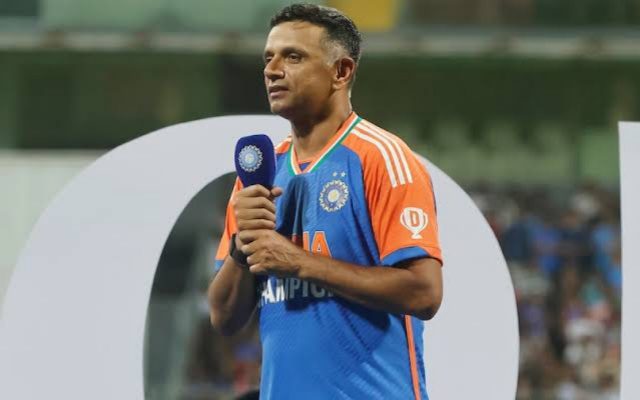
Former India head coach Rahul Dravid has offered a detailed explanation for India’s recent struggles in Test cricket, pointing directly to the challenges of modern scheduling and preparation. For over a decade India dominated at home in the longest format, often going 12 years without a home Test series defeat, but that stronghold has weakened with series losses to New Zealand and South Africa in the past couple of seasons.
According to Dravid, a large part of this decline stems from how frequently players shift between formats—Tests, One-Day Internationals and Twenty20s—without adequate time to acclimatise to the red ball and the unique demands of Test batting.
Dravid said at an event in Bengaluru that players who feature across all three formats “keep moving from one format to the other,” which leaves them “little time to practise red-ball cricket as much.” He stressed that this constant transition makes it harder for batters not just to adapt mentally but to work on specific techniques required in longer formats, especially before facing seam or spin over extended sessions.
The Red-Ball Preparation Dilemma
Central to Dravid’s argument is the preparation—or lack of it—that players get ahead of Test matches. In his era, with only two formats and less franchise cricket, he recalled having “a whole month of practicing for a Test series” where he could focus on skills with the red ball. In contrast, many modern players might arrive at a Test venue having last faced a red ball several months earlier, a gap Dravid believes fundamentally erodes technique and confidence.
He emphasised how specialised skills like playing on turning tracks or against seaming bowlers require “hours and hours” of focused practice, saying simply that the gear-shift demanded by the schedule is “not easy.” This lack of preparation, he argues, shows up in key moments in Test cricket—when patience, technique and resilience are tested over five days.
Modern Cricket’s Impact on Test Mastery
Dravid also highlighted that the sheer volume of cricket played today—international fixtures bookended by domestic and franchise tournaments—leaves little breathing room. While India remains strong in shorter formats and continues to post impressive results, the contrast with their Test results points to the adjustment problem.
He referenced current Indian batters like Shubman Gill, who have experienced first-hand the difficulty of switching formats, saying that such players now “realised how difficult it is for him to actually gear up for the Test format.”
In essence, Dravid’s assessment frames India’s Test struggles not as a lack of talent, but as a systemic challenge born from modern cricket’s relentless pace and format juggling, making red-ball excellence harder to maintain than ever.
Get the latest cricket news here, like us on Facebook, and follow us on Twitter and Instagram for more such updates.