


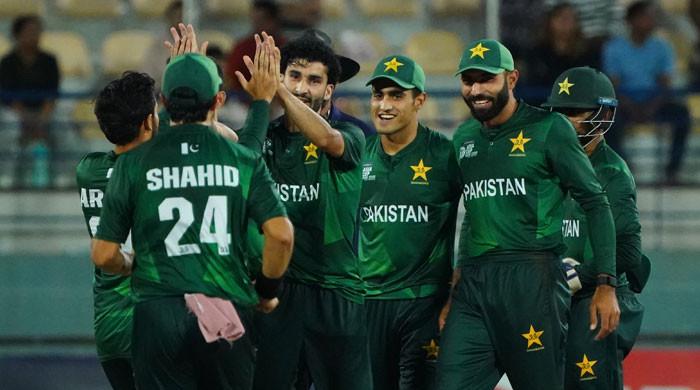
In the ongoing T20 World Cup 2026, the Pakistan Cricket Board (PCB) took the unusual step of informing the International Cricket Council (ICC) that it wanted to invoke a force majeure clause after choosing not to play its Group A match against India, scheduled for February 15 in Colombo.
Pakistan’s government had announced that the national team should boycott just this specific fixture — a decision linked to broader political tensions and in solidarity with Bangladesh, whose team had earlier refused to participate in matches in India over security worries.
Because the PCB’s letter cited the government’s directive as the reason for the boycott, the ICC has asked Pakistan to clarify how force majeure applies in this context. The board is essentially asking for contractual protection from any fallout that may arise because it declined to take the field against India.
What “Force Majeure” Means in Sports Contracts
Force majeure is a legal provision found in contracts — including the Members Participation Agreement that all teams sign before ICC events — meant to excuse parties from fulfilling obligations if extraordinary circumstances beyond their control make performance impossible.
Traditionally, these events include things like natural disasters, wars, government actions, or extreme emergencies that couldn’t reasonably have been anticipated or avoided. To successfully invoke the clause, the party claiming it must generally show that the event was unforeseeable, unavoidable, and that every reasonable effort was made to reduce its impact.
Applying this clause in sports is rare, and it tends to be interpreted strictly. Political disagreements or preferences typically don’t qualify unless there’s a clear, demonstrable impossibility — such as an outright prohibition on travel or a verified safety risk.
In the cricketing context, past instances — like teams withdrawing due to global pandemics or extreme political situations — have occasionally involved force majeure considerations. But even then, governing bodies prioritize preserving the integrity of competition wherever possible.
ICC’s Response and Possible Consequences
The ICC has now asked the PCB to provide detailed evidence and justification for its claim, including what steps were taken to mitigate or possibly avoid the situation, and whether alternatives were explored before pulling out. The global body has also warned that simply invoking force majeure won’t automatically protect Pakistan from contractual liability or disciplinary measures if the clause is determined not to apply.
Cricket administrators are particularly concerned because Pakistan’s selective non-participation challenges the basic premise of an agreed-upon tournament schedule. If the ICC finds that the force majeure argument is invalid, the PCB could face sanctions, potential breach-of-contract claims, or other penalties under ICC regulations.
Get the latest cricket news here, like us on Facebook, and follow us on Twitter and Instagram for more such updates.