

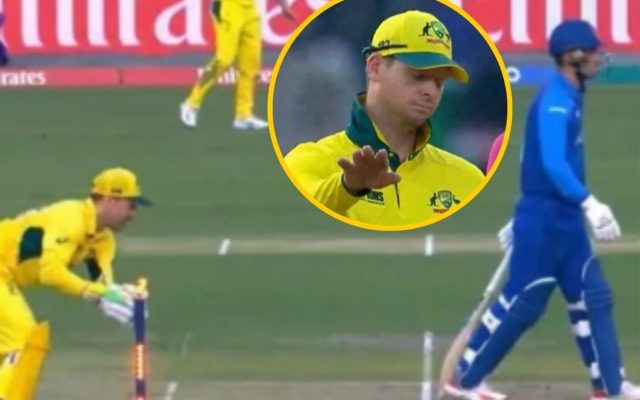
Cricket has always been a game of fine margins, strategy, and, above all, sportsmanship. One such moment of true sportsmanship was on display when Australia’s captain Steve Smith chose to withdraw an appeal against Afghanistan’s Noor Ahmad in a crucial moment of their innings.
The Incident in Detail
During the 47th over of Afghanistan’s innings, an unusual situation unfolded. Noor Ahmad, the No. 10 batter, had just completed a single when his partner, Azmatullah Omarzai, called him through. However, before the over was officially called, Noor stepped out of his crease to meet Omarzai mid-pitch, assuming the ball was dead.
However, under the rules of cricket, the ball remains live until the umpire explicitly calls “over.” Seizing the opportunity, Australian wicketkeeper Josh Inglis quickly whipped off the bails, appealing for a run-out.
Replays confirmed that Noor was well out of his crease. Had the appeal been upheld, Noor would have been dismissed, reducing Afghanistan to 248 for 9. But before the third umpire could intervene, Steve Smith signaled to withdraw the appeal, allowing Noor to continue his innings. This decision ultimately helped Afghanistan push their final score to 273.
Had Smith upheld the appeal, Afghanistan would have been left with just one wicket in hand, making it difficult to add the 25 extra runs they managed in the final overs. These runs proved crucial, as every run can be the difference in tight matches.
Understanding the Laws of Cricket
One of the fundamental aspects of cricket is understanding when a ball is considered “dead.” According to the ICC’s laws: The ball remains live until the umpire explicitly calls “over,” “time,” or a similar declaration. Run-outs are legal as long as the ball is live.
The fielding team has the right to appeal for a dismissal in such circumstances. Technically, Noor Ahmad’s dismissal would have been within the rules. However, cricket has often witnessed debates between the spirit of the game and the strict application of the rules.
Similar Incidents in Cricket History
One of the most controversial moments in recent cricket history was when England’s Jonny Bairstow was stumped by Alex Carey during the Ashes. Bairstow had stepped out of his crease, assuming the ball was dead, only for Carey to underarm the ball into the stumps. Unlike Smith, Australia upheld the appeal, leading to significant debate over whether it was in the “spirit of the game.”
Muthiah Muralidaran’s Run-Out in Christchurch, 2006
During a Test match against New Zealand, Muralidaran was dismissed in an eerily similar fashion when he stepped out of his crease to congratulate Kumar Sangakkara on reaching a century. New Zealand upheld the appeal, highlighting a contrast in how teams handle such situations.

Ian Bell’s Run-Out in the 2011 Trent Bridge Test
One of the most debated incidents in cricket saw England’s Ian Bell mistakenly believe that tea had been called, leading him to leave his crease. India initially appealed for a run-out but later skipper MS Dhoni withdrew the appeal after discussions with England’s captain, showing a gesture of sportsmanship.
Smith’s decision was met with praise from many, with cricket experts acknowledging his commitment to fair play. Former players and commentators expressed admiration, contrasting it with Australia’s stance in the Bairstow incident.
Get the latest cricket news here, like us on Facebook, and follow us on Twitter and Instagram for more such updates.