

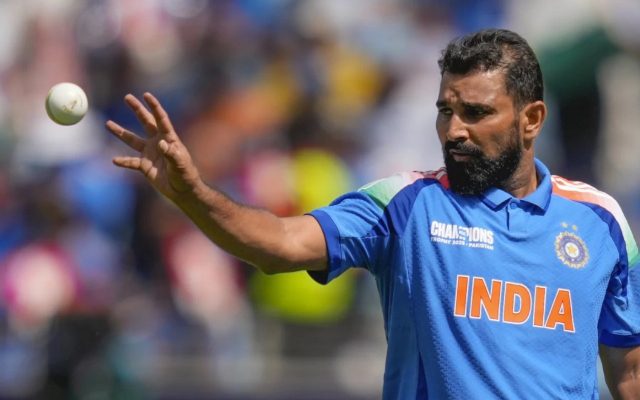
Cricket has always been a game of balance between bat and ball. However, in recent years, that balance has tilted significantly in favor of batters, especially in limited-overs cricket. One of the biggest reasons for this shift is the ICC’s decision to permanently ban the use of saliva to shine the ball. Indian fast bowler Mohammed Shami is now urging the ICC to reconsider this ban to bring back the art of reverse swing.
The ICC Ban on Saliva Usage
During the COVID-19 pandemic in May 2020, the ICC temporarily banned saliva use to prevent potential virus transmission between players. At the time, it was seen as a health and safety measure. In September 2022, the ICC made this ban permanent, arguing that sweat could serve as an alternative to shine the ball. However, many bowlers and experts believe sweat does not provide the same effect as saliva.
Mohammed Shami’s Appeal to the ICC
After India’s semi-final win over Australia in the Champions Trophy, Shami voiced his concerns, emphasizing that reverse swing has been missing from the game due to the saliva ban. He urged the ICC to reconsider, stating that reintroducing saliva would make matches more competitive and entertaining.
Shami said, “We are trying [to get reverse swing], but the usage of saliva on the ball is not allowed. We keep appealing that we should be allowed to use saliva so that we can bring reverse swing back into the game and it becomes interesting.”
Support from Former Cricketers
Former South African pacer Vernon Philander supported Shami’s stance, stating that reverse swing could have helped teams like South Africa in high-scoring matches.
Philander supported, “If we look at the state of that ball, I mean towards the back end, it was really scuffed up, and I think had you used the saliva [to polish one side of the ball], the element of the reverse swing might have come into play. So it certainly does play a part. You can get it to shine up and you use the elements to swing it a little longer.”
Tim Southee’s Perspective
New Zealand fast bowler Tim Southee also backed Shami, pointing out that bowlers need some advantage, especially in an era where 300+ scores are becoming common in ODIs.
Southee stated, “That was a rule brought around Covid with the virus going around the world, but I think as a bowler, you want to have a slight advantage. We see the game going the way it’s going and seeing sides score 362 and more often than not over 300 in this format. I think there needs to be something in the bowlers’ favour, and whether that’s a little bit of saliva, then yeah, I don’t see why they couldn’t afford to get that back in.”

Impact of the Ban on Bowling
Without saliva, reverse swing has become rare, making it harder for pacers to take wickets in the later stages of an innings. With bowlers struggling to extract movement, batters have enjoyed record-breaking scores, making matches one-sided. While ICC suggests using sweat as an alternative, experts argue that sweat makes the ball too wet, reducing friction and making reverse swing nearly impossible.
Get the latest cricket news here, like us on Facebook, and follow us on Twitter and Instagram for more such updates.