

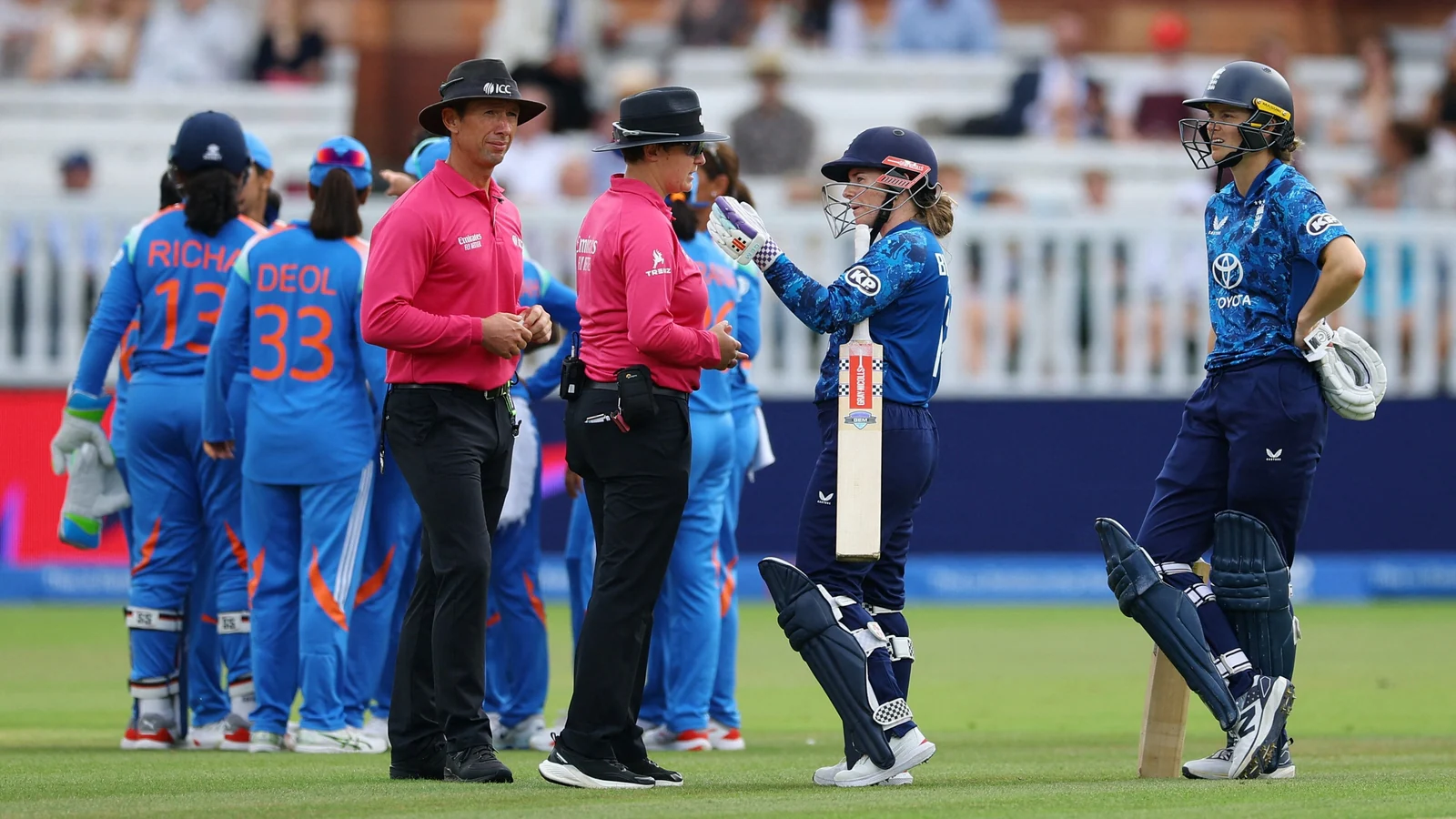
During the second Women’s ODI between England and India at Lord’s, Tammy Beaumont was involved in an ‘obstructing the field’ appeal. The third umpire ruled her not out, but the incident sparked discussion about the interpretation of cricket laws in the women’s game.
Beaumont’s Foot Movement Sparks Chaos
In the fifth over of the second ODI at Lord’s, Deepti Sharma bowled a full delivery to England’s Tammy Beaumont, who drove it straight to Jemimah Rodrigues at short midwicket. Tammy Beaumont aborted a single and returned to her crease. As she stepped in, her right leg moved toward Jemimah Rodrigues’ incoming throw, raising questions about possible obstruction. Indian players immediately appealed, prompting the umpires to refer the incident to the third umpire.
Play was halted as the on-field umpires discussed the appeal involving Tammy Beaumont. They referred the incident to the third umpire, who, after reviewing the replays, ruled Beaumont not out. The decision cited lack of clear evidence of deliberate obstruction.
Understanding Law 37: Obstructing the Field
MCC Law 37.1.1 states that a batter can be given out for obstructing the field if they wilfully attempt to block or distract the fielding side while the ball is in play. Exceptions under Clause 37.2 include accidental contact, defending the wicket, or avoiding injury. The law applies regardless of whether the batter is inside the crease—intent remains the key factor. In Tammy Beaumont’s case, her movement was reviewed, but no clear evidence of intent was found.
The incident involving Tammy Beaumont in the second Women’s ODI has sparked debate over intent in obstruction cases. Some observers felt her leg movement was deliberate, while others saw it as incidental.
England’s Dominance in a Rain-Affected Match
England levelled the series 1-1 with a comfortable eight-wicket win in a rain-shortened second ODI at Lord’s. Chasing a revised t,arget of 115 in 29 overs, Amy Jones scored an unbeaten 46 to guide the hosts home. India’s batting faltered after a strong start to the series, with only Smriti Mandhana (42) offering resistance as the team posted 143/8.
England’s bowlers, led by Kate Cross and Sophie Ecclestone, maintained pressure throughout. The result sets up a decisive third match amid ongoing discussion around the obstruction appeal involving Tammy Beaumont.
Why This Incident Matters for Women’s Cricket
Women’s cricket continues to face increased scrutiny, with recent incidents drawing attention to the need for clearer enforcement of rules. The obstruction appeal in the second ODI between England and India highlighted ambiguity around the interpretation of intent. Critics argue that laws like MCC’s obstruction rule should be more precisely defined to avoid confusion.
Umpires are urged to balance instinct with regulation, while players are reminded to steer clear of movements that could be misread. With the series now tied at 1-1, the final ODI will not only decide the winner but also offer a chance for cricket—not controversy—to take center stage.
Get the latest cricket news here, like us on Facebook, and follow us on Twitter and Instagram for more such updates.