

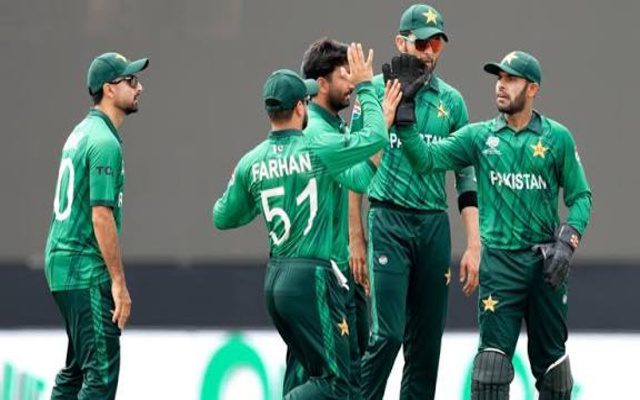
The build-up to the T20 World Cup 2026 has taken a fresh turn as discussions around hosting arrangements and participation issues continue to dominate cricketing circles. What initially began as a debate over match venues has now evolved into a larger conversation involving long-term planning for global tournaments. With political considerations once again intersecting with the sport, the International Cricket Council is working to manage a situation that could shape the future structure of major events.
Pakistan And Bangladesh Push For Long-term Framework
Pakistan and Bangladesh have reportedly raised a significant proposal during ongoing talks with the ICC. Both boards are understood to be in favour of extending the hybrid hosting model beyond the 2026 tournament, possibly until 2031. Their reasoning is based on the need for stability and clarity in international cricket scheduling, which has often been disrupted by diplomatic tensions and last-minute changes.
According to sources, the two boards believe that a longer-term agreement would reduce uncertainty for teams, organisers, broadcasters, and fans. A fixed framework, rather than event-by-event negotiations, could help streamline planning and avoid repeated disputes before every major ICC tournament. The hybrid model is being seen as a workable compromise that allows tournaments to go ahead smoothly despite political challenges.
India Boycott U-turn Adds Complexity To Talks
A major factor influencing the current negotiations is the reported change in Pakistan’s stance regarding a possible boycott involving India. Earlier indications of refusing to play against India had raised serious concerns within the ICC, given India’s central role in global cricket. However, recent signals suggest a more flexible approach, opening the door for renewed discussions.
This apparent shift has added another layer of complexity to the talks. Any uncertainty around matches involving India has significant sporting and commercial implications. The evolving positions of the boards involved have forced the ICC to revisit contingency plans and reassess how future tournaments can be safeguarded from similar disruptions.
Potential Impact On Future ICC Events
The outcome of these negotiations could have far-reaching consequences beyond the T20 World Cup 2026. If the ICC agrees to extend the hybrid model for multiple tournaments, it may redefine how international cricket handles geopolitical issues in the long run. Such a decision would indicate a move toward flexibility becoming a standard feature of global events rather than a temporary solution.
For now, discussions remain ongoing, with the ICC attempting to balance fairness, practicality, and the spirit of the game. While no final decision has been announced, it is clear that the resolution of this issue will play a crucial role in shaping the future of international cricket and how it adapts to off-field challenges.
Get the latest cricket news here, like us on Facebook, and follow us on Twitter and Instagram for more such updates.