

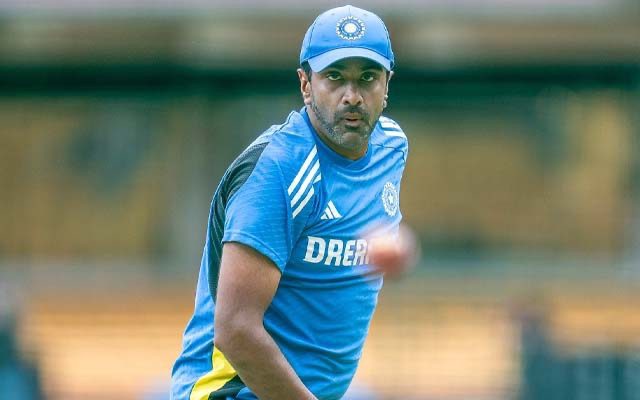
Veteran spinner Ravichandran Ashwin has voiced strong criticism of India’s team selection for the first ODI against Australia in Perth. The decision to bench in-form spinner Kuldeep Yadav drew particular scrutiny from Ashwin, who admitted he “didn’t get” the logic behind it. Speaking on his YouTube channel, he said, “On a big ground like Perth, Kuldeep could have bowled freely.
His overspin and bounce would’ve troubled any batter.” Ashwin argued that such conditions were ideal for a wrist-spinner, making his exclusion both confusing and disappointing for fans and experts alike.
“Play Your Best Bowlers” – Ashwin’s Message To Management
Ashwin didn’t hold back in questioning India’s overall team strategy, suggesting that the management was too focused on extending the batting lineup instead of prioritizing quality bowling. India fielded three all-rounders—Washington Sundar, Axar Patel, and Nitish Kumar Reddy—to deepen the batting order.
However, Ashwin called the approach misplaced, remarking, “If your plan is batting depth, then your batters must take responsibility. Don’t pick a team just to extend your batting; play your best bowlers.” He implied that the team’s approach seemed defensive, almost as if the selectors were trying to “shield” the batting order by adding extra all-rounders rather than trusting their core players.
India’s Struggles Reinforce Ashwin’s Concerns
The outcome of the match only strengthened Ashwin’s point. India managed just 136 runs in 26 overs after a rain interruption, suffering a heavy defeat. Senior players like Rohit Sharma and Virat Kohli, returning to international cricket after a break, failed to make significant contributions. Shubman Gill, leading the side in Rohit’s absence, also couldn’t anchor the innings. The lack of penetration in the bowling attack and the unbalanced lineup reflected precisely what Ashwin had warned against—an overemphasis on depth at the cost of effectiveness.
Ashwin’s remarks have since ignited a larger debate about India’s team composition strategy, particularly in white-ball formats. His critique highlights the need for balance—between batting insurance and bowling strength—especially on challenging overseas pitches. As he succinctly put it, “You can’t protect your batters forever. At some point, you must back your best bowlers to win you games.”
India’s management now faces tough questions about whether tactical caution is costing them the aggressive edge needed in modern ODI cricket.
Get the latest cricket news here, like us on Facebook, and follow us on Twitter and Instagram for more such updates.