

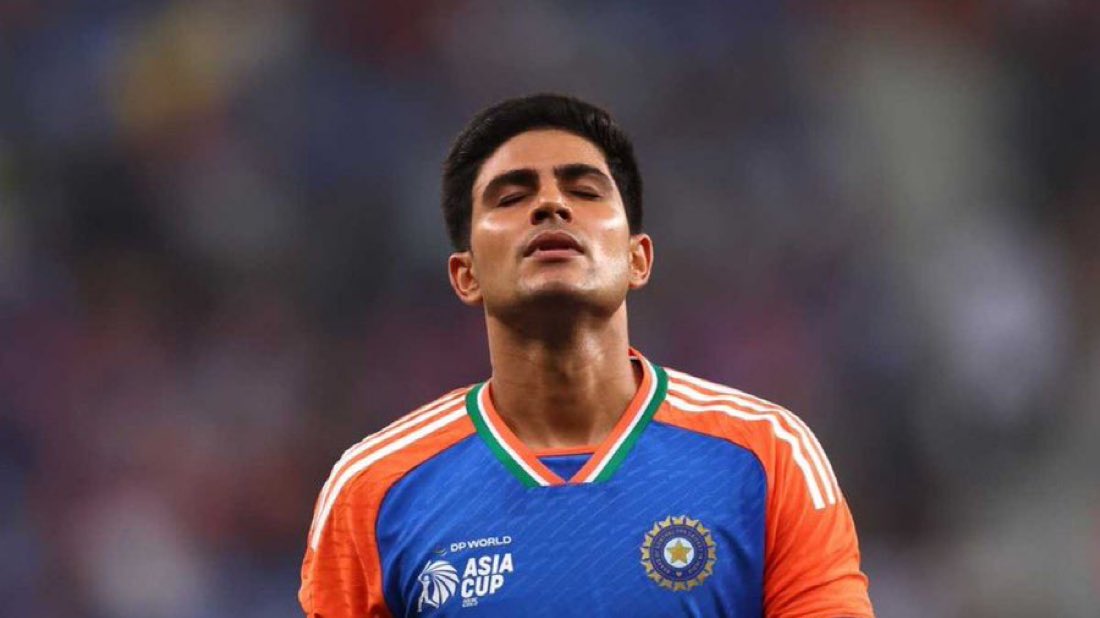
Shubman Gill’s omission from India’s squad for the ICC T20 World Cup 2026 came as a major surprise, especially after the management had previously shown long-term faith in him. The decision gained more attention because Gill was once viewed as a core member of the T20 setup.
However, recent performances, fitness concerns, and team balance considerations seem to have influenced the selectors. After struggling for consistency since the 2025 Asia Cup and missing games due to injury, Gill now finds himself out of the 15-man squad. When looked at closely, this call appears to be a well-thought-out move rather than a sudden one.
1. Flexibility To Open With A Wicket-Keeper And Strengthen Team Balance
One of the key ideas highlighted by captain Suryakumar Yadav and chief selector Ajit Agarkar was the importance of opening with a wicket-keeper. When Gill and Abhishek Sharma opened earlier, the wicket-keeper was forced into the middle order, often pushing either a specialist finisher or an all-rounder out of the XI.
With Gill no longer in the picture, India can now open with players like Sanju Samson or Ishan Kishan, both of whom can keep wickets and score quickly. This frees up an extra slot in the middle order, allowing the team to either include Rinku Singh as a dedicated finisher or add another bowling option for greater depth. Gill’s modest return of 291 runs in 15 matches in 2025 at an average of 24.25 left the selectors with little choice, as carrying an uncertain opener into a World Cup would have limited India’s flexibility and overall balance.
2. No Room For Out-of-form Players In A World Cup Campaign
Form becomes even more critical in a tournament as demanding as the T20 World Cup. India already have concerns around consistency in the middle order, and carrying an out-of-form opener would only increase the pressure on the rest of the batting lineup. Gill’s struggles meant that early wickets were becoming frequent, forcing the middle order to rebuild repeatedly.
With Suryakumar Yadav himself searching for peak form, the team could not afford another unreliable top-order batter. The management also lacked the luxury to experiment during the New Zealand series, as they needed a settled opening pair for continuity. In this context, persisting with Gill would have been a risky gamble rather than a calculated decision.
3. Samson And Abhishek Provide Better Chemistry And Powerplay Impact
Despite Gill sharing strong off-field camaraderie with Abhishek Sharma, the pairing never truly clicked on the field due to Gill’s form issues. In contrast, Abhishek Sharma and Sanju Samson have shown better coordination, intent, and results as an opening duo. Their aggressive approach allows India to maximise the powerplay, which is crucial in modern T20 cricket.
While Gill was seen as an anchor in an explosive lineup, that role cannot come at the cost of slow starts. India still have players like Tilak Varma who can anchor when needed. Given the current options, Samson and Abhishek offer the best chance of strong starts and a more balanced XI, making Gill’s exclusion a difficult but necessary call.
Get the latest cricket news here, like us on Facebook, and follow us on Twitter and Instagram for more such updates.