

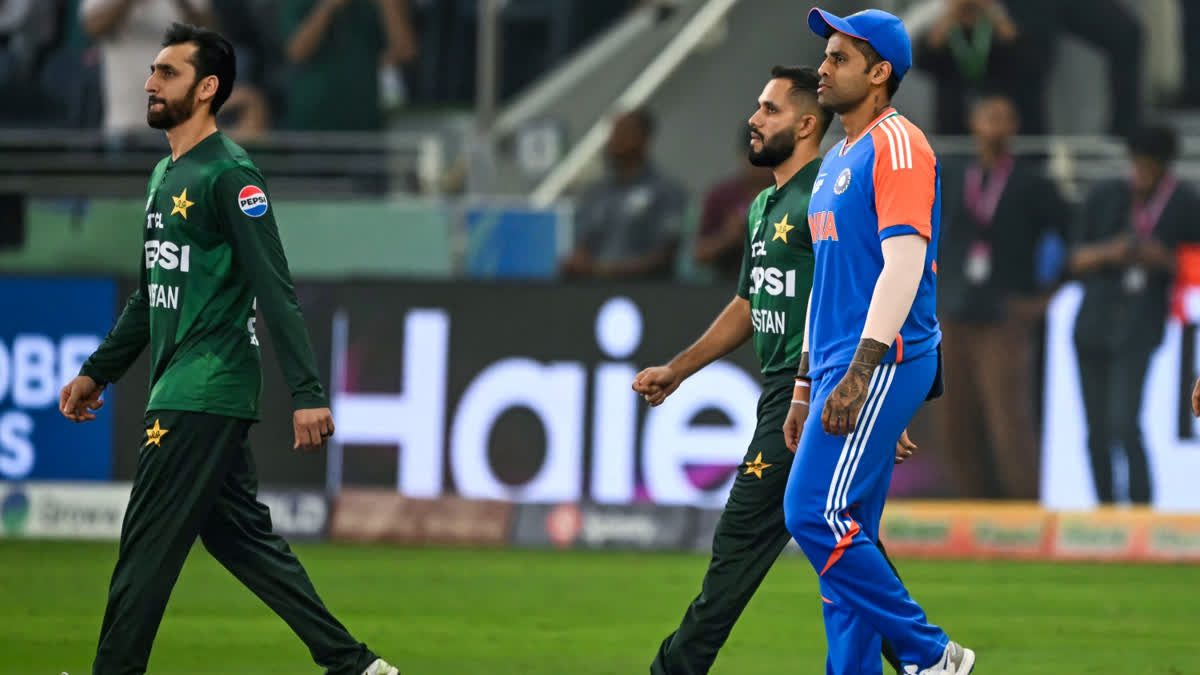
In the highly anticipated ICC Men’s T20 World Cup 2026 clash between India and Pakistan, the ongoing debate over sportsmanship and diplomatic gestures has once again taken centre stage.
For the second major international tournament in a row — following the Asia Cup 2025 — the Indian cricket team persisted with what has come to be described as a “no-handshake policy” when facing Pakistan on the field.
This meant that before and after the match, traditional customs such as handshakes between players and opponents, which are generally seen as symbols of mutual respect and fair play, were not followed by the Indian side.
India’s T20 captain Suryakumar Yadav adhered to this stance during the pre-match proceedings at Colombo, where, alongside Pakistan skipper Salman Ali Agha, he refrained from any physical greeting during the toss. In fact, reports highlighted that “the two captains did not look at each other even once during the toss proceedings,” underscoring how stark the interaction was.
Officials and cricket fans alike noted that India will not arrange any post-match handshake between players or wickets, and this clearly deliberate approach has been framed by the Indian leadership as more than just a gesture in cricket.
Reasons and Response Behind the Gesture
The “no-handshake policy” is not just about sports etiquette but is tied to larger emotional and ideological reasons. India’s team management has indicated that this choice aligns with a gesture of solidarity for those affected by the Pahalgam terror attack, where several civilians lost their lives, and as a mark of respect for the Indian armed forces following Operation Sindoor — both events which have contributed to deep national sentiments and sensitivities.
In media interactions, Yadav has maintained a neutral tone when asked whether the policy would continue, often deferring on specifics with remarks along the lines of what will unfold on the day of the match — “you’ll find out tomorrow.”
Pakistan’s captain, Salman Ali Agha, on the other hand, chose to comment on the broader spirit of the game. Even though he acknowledged the tension, he expressed a hope that teams should strive to “uphold the spirit of cricket” despite diplomatic and political undercurrents.
Reactions and Wider Discussion
The stance has generated considerable discussion both inside and outside cricketing circles. Former players and commentators have weighed in with divergent opinions. Some critics have described the approach as unnecessary or even counter-productive to the ethos of international sport. A few former cricketers labelled the move “silly” or questioned whether avoiding simple gestures affects the larger perception of sportsmanship.
On the other hand, many supporters of the current Indian policy view it as a powerful symbolic position reflecting broader national considerations, particularly where emotions run high between the two South Asian rivals whose matches are among the most watched and passionately followed in world cricket.
Get the latest cricket news here, like us on Facebook, and follow us on Twitter and Instagram for more such updates.