

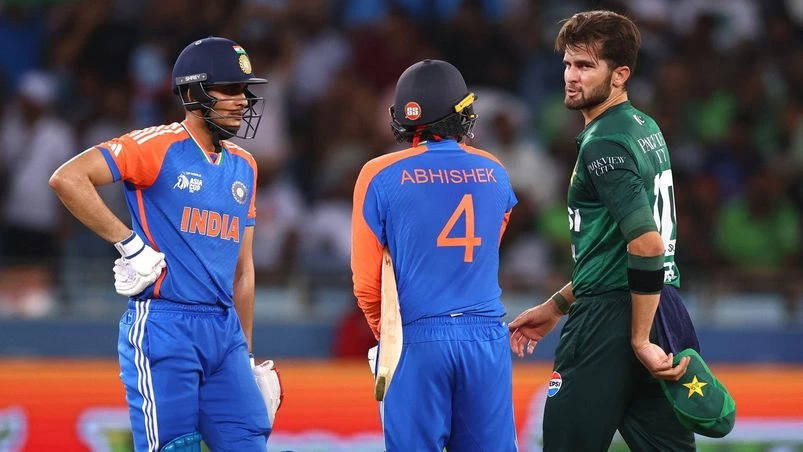
The Asia Cup 2025 has evolved far beyond a mere sporting event. What should have been a celebration of cricketing excellence has become a theatre of politics, provocation, nationalism, and unscripted drama. From defiant gestures on the field to symbolic protests and social media battles, off-field narratives have often overshadowed the action between bat and ball.
As arch-rivals India and Pakistan prepare to clash once again in the highly anticipated final, the tournament’s most talked-about moments reveal just how deeply cricket can intertwine with larger geopolitical tensions.
1. “No Handshakes”: Sportsmanship or Silent Protest?
One of the earliest controversies erupted around a simple yet powerful act — the handshake. During both the group stage and Super Four clashes, Indian captain Suryakumar Yadav refused to shake hands with his Pakistani counterpart Salman Ali Agha, both at the toss and after the match. Pakistan’s management promptly lodged a protest, accusing India of “unsporting behaviour” and disrespecting the spirit of cricket.
Reports later suggested that match referee Andy Pycroft may have advised captains to avoid handshakes due to heightened political and security sensitivities, though this was never officially clarified. This ambiguity only intensified the controversy, with critics arguing that it symbolised a deeper diplomatic rift playing out on the cricket field.
2. Provocative Gestures: When Celebrations Turn Political
The rivalry’s tension was further heightened by a series of provocative gestures from Pakistani players. Fast bowler Haris Rauf infamously flashed a “6-0” sign towards Indian fans during the Super 4 clash — a reference to disputed claims about Pakistan shooting down six Indian jets. He even mimicked a falling plane, turning celebration into political theatre.
Sahibzada Farhan added to the drama by performing a “gun-bat” gesture after scoring a half-century. These actions prompted the ICC to summon both players for disciplinary hearings. What might have been dismissed as overzealous celebrations instead exposed how geopolitics continues to shadow the India-Pakistan rivalry, even on the pitch.
3. Political Statements and Code of Conduct Concerns
Cricket and politics collided again when Suryakumar Yadav dedicated India’s victory in the opening match to the victims of the Pahalgam terror attack. While many applauded the gesture, the ICC launched a review, citing potential breaches of its Code of Conduct, which prohibits political statements during official matches.
The PCB responded by filing counter-complaints, accusing Indian players of using their platform for political messaging. This exchange highlighted how post-match interviews and player comments can quickly become flashpoints in the already volatile India-Pakistan dynamic.
4. Administrative Standoffs and Withdrawal Threats
Tensions were not limited to players. The tournament’s very existence was threatened earlier in 2025 when the BCCI considered pulling India out of the Asia Cup amid worsening diplomatic relations. Pakistan retaliated mid-tournament by threatening to withdraw unless referee Andy Pycroft was replaced, alleging bias and mismanagement over incidents like the handshake controversy.
The standoff escalated to the point that Pakistan’s match against the UAE was delayed by nearly an hour. Although the ICC stood firm and Pycroft remained, the episode exposed the tournament’s fragile political undercurrents and how close it came to being derailed by off-field disputes.
5. Social Media Firestorms and Fan Provocations
If the controversies on the field weren’t enough, the digital arena amplified them. Viral clips of Haris Rauf reacting angrily to chants of “Kohli, Kohli” and Indian pacer Arshdeep Singh responding with his own gestures turned social media into a battleground. These online confrontations often overshadowed the actual matches, as fans and pundits dissected every action and reaction.
The involvement of former cricketers and commentators only added fuel to the fire, pressuring both players and administrators to respond. The cycle of provocation, reaction, and escalation demonstrated how deeply public sentiment — both in stadiums and online — influences the narrative of modern cricket.
Asia Cup 2025 has proven that cricket between India and Pakistan is never just about sport. It’s a mirror reflecting political tensions, national pride, and social sentiments on both sides of the border. As the final approaches, fans and officials alike brace for more than just a battle for the trophy — they anticipate another chapter in a saga where every gesture, statement, and decision carries weight far beyond the scoreboard.
Get the latest cricket news here, like us on Facebook, and follow us on Twitter and Instagram for more such updates.