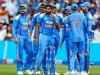


It was once a sideshow, squeezed between men’s fixtures and late-night infomercials. In 2025, women’s cricket is box office. From Mumbai living rooms to Melbourne sports bars, more people watched women swing the willow this season than at any time in history. Here’s how the numbers exploded—and why they’re only a hint of what’s next.
A Year Written in Big, Bold Digits
When the Women’s Premier League (WPL) wrapped its third season in March, broadcasters logged a cumulative global audience of more than 250 million across TV and digital—double 2024 and ahead of every other women’s domestic league on the planet. Even single fixtures smashed ceilings: the Bengaluru opener between Royal Challengers and Gujarat Giants drew 30 million Indian TV viewers, a 150 percent leap on last year and the highest league-stage figure ever recorded by BARC. The surge wasn’t confined to India, either; Australia’s five-match Women’s Ashes T20 averaged 455,000 domestic viewers per game, the best-watched bilateral women’s contest on record Down Under. With such momentum, multisport fans—many already checking live basketball lines on 1xbet NBA odds during off-overs—have begun following the women’s game in unprecedented numbers, turning prime-time broadcasts into must-see events.
Why 2025? Five Tailwinds Converge
- Prime-time scheduling. Broadcasters finally placed women’s fixtures in the same evening windows that super-charge men’s ratings, eliminating the “school-night” disadvantage.
- Seamless dual feeds. The Jio-Star consortium simul-cast every WPL match on linear TV, CTV and the Hotstar app, letting fans toggle screens without switching ecosystems—CTV viewership alone grew 2× year-on-year.
- Short-form highlights at lightspeed. AI clipping tools pushed boundary montages to Instagram Reels within 60 seconds, keeping casual scrollers in the funnel.
- Story-first marketing. BCCI’s “Willow Warriors” campaign profiled players’ back-stories—an orphan turned quick bowler, a village leg-spinner who practised with taped-tennis balls—humanising heroes and widening appeal.
- Value-hungry brands. Women’s inventory sells at a 70 percent discount to men’s IPL spots; cost-per-reach metrics proved irresistible to advertisers banking on purpose-led narratives.
The WPL Effect: A League Becomes a Movement
WPL’s broadcast deal—₹951 crore (US $176 million) over five years—looked audacious when inked in 2023; two seasons later it feels like a steal.
Stadium atmospheres kept pace with screens: average gate receipts jumped 40 percent, and every Bengaluru match sold out by match-day minus-one.
Commercial momentum followed eyeballs. Tata Capital, Amul and Himalaya joined as front-of-shirt sponsors, while 70+ brands bought WPL spots this season, up from 50 in the inaugural year.
“We’re no longer pitching women’s cricket as ‘good for CSR’. We’re pitching it as good business,” says Rajeev Shukla, BCCI vice-president, crediting the league’s IPL-honed production polish for the quick uptake.
Ripple Effects Across Continents
- United Kingdom. Sky’s Women’s Hundred coverage plateaued last year, but with Indian stars now guest-starring between WPL seasons, the network reported a 12 percent uptick in the 2025 curtain-raiser.
- Caribbean & USA. Willow TV’s spring schedule—heavy on West Indies women’s tours—registered its highest North-American minute-share since the channel’s 2010 launch, helped by prime-time slots that align with East-Coast evenings.
- Africa. SuperSport bundled women’s bilateral series into its top-tier cricket pass at no additional cost, boosting reach figures by a reported 38 percent versus 2024.
Money Talks: Sponsorship, Salaries and Social Capital
Franchise valuations have soared 60 percent in two years, with Mumbai Marvels closing a secondary share sale at ₹950 crore (US $180 million). Player pay cheques kept pace: star all-rounder Harmanpreet Kaur’s ₹3.4 crore contract made her the highest-paid female cricketer ever, eclipsing top WNBA salaries.
Off the field, endorsement rosters look refreshingly gender-balanced. E-commerce giant Myntra’s “Power Dressing” campaign pairs Virat Kohli with Smriti Mandhana, and analytics show Mandhana pulling 48 percent of total click-throughs—proof she’s not the supporting act.
Culture Shift: Little Girls, Loud Dreams
Social feeds now teem with clips of schoolgirls copying Shafali Verma’s inside-out loft over extra-cover, or practising Meg Lanning’s reverse scoop with tennis balls on concrete wickets. Grass-roots sign-ups at India’s National Cricket Academy rose 26 percent among under-13 girls this summer, BCCI officials confirm.
Parents, long wary of sending daughters to late-night nets, cite prime-time visibility and professional pathways as game-changers. The generational mental pivot—from “Cricket isn’t for girls” to “Cricket could be your career”—may be 2025’s most enduring legacy.
Challenges on the Horizon
- Calendar congestion. The 2025 ICC Women’s World Cup looms in October; domestic leagues in England, Australia and South Africa jostle for windows, risking player burnout.
- Pay gap optics. Although top WPL salaries hit six figures, median retainers remain a tenth of men’s IPL equivalents. Sustained growth must translate to deeper wage bills, not just superstar spikes.
- Broadcast bandwidth. With men’s Champions Trophy matches sometimes clashing with WPL fixtures, ratings cannibalisation is real. Broadcasters will need smarter cross-promotion and flexible scheduling to avoid viewer fatigue.
8. The Road to 2026 and Beyond
The ICC has pencilled a Women’s Champions League—an inter-franchise playoff featuring WPL, W-BBL and The Hundred winners—for February 2026. If approved, the mini-tournament could become the Champions League of the cricketing calendar, force-multiplying audiences across hemispheres.
Meanwhile, the push for cricket’s re-admission to the 2028 Los Angeles Olympics gains fresh momentum, with IOC officials privately impressed by women’s viewership data as a growth-market indicator.
Conclusion
The phrase “Willow Warriors” no longer reads like a marketing slogan; it feels like an apt honorific for athletes whose influence now reaches hundreds of millions. In 2025, women’s cricket didn’t just set viewership records—it rewrote the sport’s hierarchy, proved commercial viability at scale, and inspired a generation of fans who see no asterisk next to “women’s game.” Record-breaking numbers are the headline, but the bigger story is the culture shift they signal: cricket as a truly shared stage, where talent—and the audiences who celebrate it—are finally gender-blind.
Get the latest cricket news here, like us on Facebook, and follow us on Twitter and Instagram for more such updates.